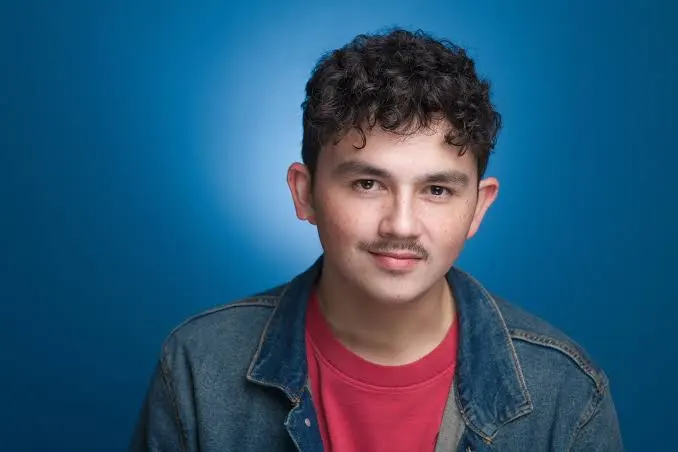
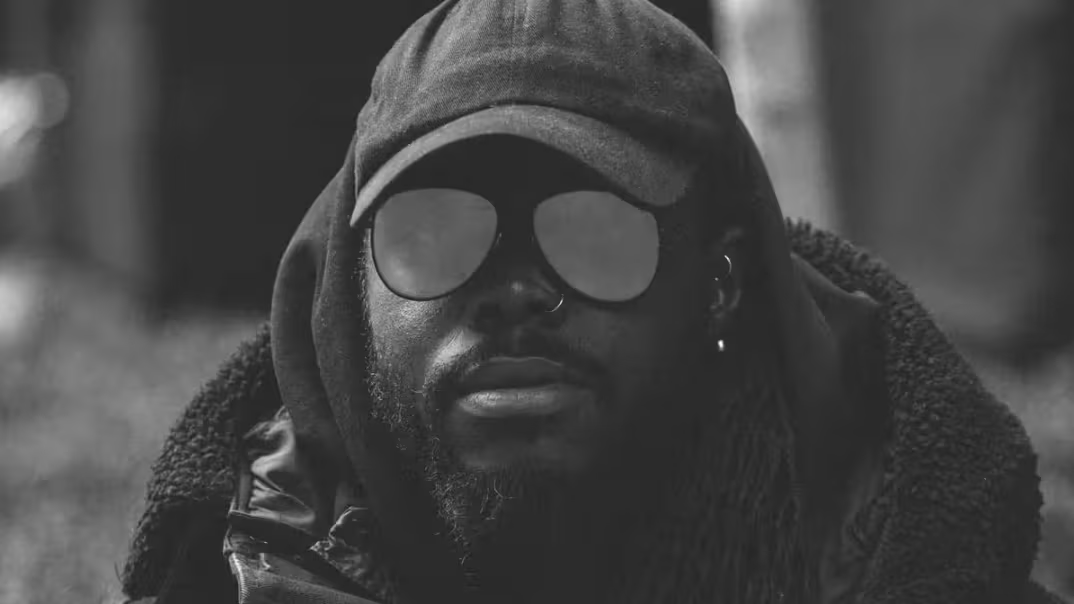
When Tate Yap joined us on Music Explored, we expected to hear about his dual career as an actor and musician. What we got was a masterclass in persistence, authenticity, and the power of thick skin—lessons that hit surprisingly close to home for anyone building something meaningful in the entertainment industry.
Here's someone who built his entire fanbase online before ever playing a real live show, sends 30-40 emails knowing most won't respond, and refuses to compromise his identity for algorithm-chasing content. After 11+ years of building The DNA Project, we understand Tate's journey intimately.
The Problem-Solver Origin Story
"I just spent hours and hours," Tate explained about those early days at Fanshawe College. His roommates had all dropped out or failed. He was alone in a four-bedroom dorm with a guitar and rotting leftovers in the fridge.
This wasn't about having perfect conditions or waiting for the "right time." It was about a musician using whatever circumstances he had to develop his craft—even if it meant teaching himself guitar through YouTube videos while completely isolated.
At The DNA Project, we've taken a similar path. We didn't wait for "perfect" conditions to rebuild after losing our Facebook and Instagram accounts in November 2024. We started from scratch, built new systems, and kept pushing forward. You work with what you have, not what you wish you had.
The lesson: Perfect conditions are a myth. Start where you are with what you have.
The Power of Thick Skin
One of the most striking insights from our conversation was about rejection and persistence. Growing up in Cambridge, Ontario, Tate faced three to four-hour bus rides each way just to get to auditions in Toronto. Full school days missed. Dreams coming within reach only to slip away.
"I've been told no a billion times and gotten this close to dream roles," he shared. "People are like, how did you do that? And I emailed like 30, 40 people and I got zero responses and then two people responded."
Most people stop at zero responses. Tate keeps going. That thick skin came from years of acting auditions—showing up, getting rejected, and doing it again the next day.
This resonates deeply with how we've built The DNA Project. When you're booking entertainment for corporate events at MLSE or luxury weddings across the GTA, rejection is part of the process. Not every pitch converts. Not every artist is available. Not every client is the right fit.
But like Tate searching through Spotify credits and cold-emailing producers, we've built our business through relentless relationship-building. When we lost our social media accounts with years of content and connections, we didn't stop—we rebuilt. That's the entertainment industry.
The lesson: Your ability to handle rejection determines your ceiling. Thick skin isn't optional—it's your most valuable asset.
Authenticity Over Algorithms
I'd rather slowly build an audience who's really supporting me rather than having a million followers because I posted a couple viral videos.
In an era where everyone's chasing algorithms and viral moments, this is revolutionary. Tate deliberately chooses quality over quantity—posting what feels authentic even when it means lower view counts but higher engagement.
"I'm gonna try to just post whatever I think of and the response is good, even if the numbers aren't as high. The engagement's definitely better."
At The DNA Project, we've lived this tension. After rebuilding our Instagram from zero in January 2025, we could chase viral wedding content or trending audio. Instead, we're focusing on what we've always done: showcasing real events, highlighting our roster of talent, and providing genuine value to clients planning corporate events and luxury weddings.
The algorithm rewards volume. Authenticity rewards loyalty. We'll take loyalty every time.
The lesson: Authentic engagement beats hollow follower counts. Build a community, not just an audience.
The Journey in Numbers
30-40 Emails
Tate sends this many cold emails to producers, knowing most won't respond. Two do—and that's enough.
3-4 Hours
Each way on buses from Cambridge to Toronto for auditions as a kid. Full school days missed for opportunities that often didn't pan out.
Zero Live Shows
Built his entire streaming fanbase before playing his first real performance. Inverting the traditional model completely.
One Nord Piano
Just him and his keyboard for his first show at Toronto's Rivoli. No band. No safety net. Just authentic performance.
Five Lessons for Entertainment Professionals
1Building Online First, Playing Live Second
Perhaps the most counterintuitive part of Tate's story is his approach to live performance. In an industry where most artists grind through years of local bar gigs before gaining online traction, Tate did the opposite—he built his entire fanbase through streaming and social media before ever playing a real show.
When we spoke, he was preparing for his first live performance at Toronto's Rivoli—just him and his Nord piano. No band. No safety net. He'd already built thousands of streams on Spotify, had editorial playlist placements, and created a dedicated following.
At The DNA Project, we've evolved our model multiple times—from traditional band services to full entertainment consulting. We didn't wait until we had every system perfect or every service offering fully developed. We adapted as we grew.
The lesson: There's no single path to success. Invert the model if it serves your goals better.
2The Identity Shift That Changes Everything
The most powerful moment in our conversation came when Tate discussed identity and mindset. Most artists say "I want to be a musician" or "I'm trying to make it." Tate flipped that entirely.
If you're releasing music, if you're making music, you ARE a singer. Whether I have a thousand or a hundred thousand streams on a song or 10 million, everyone's doing the same thing. If you're doing it, you're already there.
He draws parallels to friends trying to quit vaping. When people ask if they vape, they'd say "I'm trying to quit" or "I used to." His advice? Just say no. "I'm an artist, I'm an actor," Tate says about his own identity. Not "trying to be." Just "am."
This identity shift is everything. At The DNA Project, we're not "trying to build" an entertainment consulting company—we ARE entertainment consultants. We don't "hope to work with" major corporate clients—we DO work with them. That subtle mental shift changes how you show up, how you pitch, and how clients perceive you.
The lesson: You become what you claim to be. Stop saying "trying" and start saying "am."
3Strategic Execution Over Perfect Understanding
"I wish I could sit here and say I understood how the streaming side works," Tate admitted. "I don't know exactly how I've gotten the success that I've had so far on Spotify."
But what he does know, he executes relentlessly: meticulous playlist pitching to Spotify editors, utilizing Marquee and Showcase campaigns, creating canvases (those 8-second video loops), and focusing on tools that actually move the needle.
He also knows what doesn't work: assuming that millions of views on a music video clip will translate directly to streams. The algorithms are completely separate beasts.
At The DNA Project, we've learned similar lessons about marketing. Our most successful client acquisitions don't come from viral posts—they come from consistent relationship-building, referrals from past clients, and venue partnerships we've cultivated over a decade.
The lesson: Master the tools that directly impact your goals. Views are vanity; streams (or bookings) are sanity.
4The Voice That Almost Wasn't
Tate's musical journey didn't follow the typical trajectory. As a child actor starting at age 5, singing was initially just an asset to have. But when his voice dropped during puberty, everything fell apart.
"Second my voice dropped, everything sounded terrible, so I kind of gave up on it for quite a few years," he admits.
The resurrection of his voice came in the most mundane way possible: driving. "Once I got a car and started listening to music in the car again, I started just singing my heart out really, really badly to Lewis Capaldi and all the voice cracks possible, but I got the range back."
That raw vulnerability—singing terribly until it became beautiful—would become a defining characteristic of Tate's approach to his craft.
The lesson: Your greatest asset might need to be rebuilt from scratch. That's okay. Start ugly.
5Action Beats Perfection
"Just don't overthink it and just put it out," Tate told us when asked for advice. "Had I sat there a little bit too long before posting a video online, I probably wouldn't have started."
He remembers that first Instagram story—posting it without thinking, when he was feeling vulnerable about his newly recovered voice.
"I just did it. I didn't sit for a minute. Had I not done that, I probably wouldn't be doing it today."
This is the entrepreneurial mindset in entertainment. At The DNA Project, we've launched services, tested pricing models, restructured our team, and pivoted our positioning—all while actively working with clients. You can't wait for perfect. You have to move, learn, and adjust.
The lesson: Action beats perfection. You can't steer a parked car.
The DNA Project Connection
After this conversation, we're reminded why we love what we do in the entertainment industry. Like Tate's mission to stay authentic while building a sustainable music career, our mission at The DNA Project is to provide world-class entertainment experiences while maintaining the relationships and integrity that got us here.
Perhaps the most telling moment in the interview was Tate's commitment to balance. He's not just chasing music at all costs—he's strategic about building a sustainable career that allows him to stay true to himself while making a living.
That's the difference between someone in the entertainment business and someone who is the entertainment business. At The DNA Project, we're still musicians, still connected to the art form, still passionate about live performance—we just happen to have built a business around it too.
That passion shows in every artist we recommend, every relationship we maintain, and every event we help create.
Ready to Work With Real Entertainment Professionals?
Whether you're planning a corporate event, a dream wedding, or need ongoing entertainment programming for your venue, The DNA Project brings the same authenticity and persistence that defines every successful artist's journey.
Let's Create Something Memorable
Listen to the Full Episode
This article only scratches the surface of Tate's incredible journey and insights. To hear the complete conversation, including more details about his approach to streaming, his thoughts on balancing acting and music, and his advice for artists just starting out, listen to the full episode of Music Explored.
Connect with Tate Yap: Instagram, TikTok, YouTube, and Spotify: @tateyap
Music Explored is a podcast that dives deep into the careers and creative processes of music industry professionals. From Grammy-winning producers to independent artists building careers on their own terms, each episode offers practical insights for artists, creators, and anyone interested in the business of music and entertainment.



.jpg)